An owner’s representative is the person or firm that runs a building project on the owner’s behalf. They sit on the owner’s side of the table, independent of the designers and the contractor, and hold the scope, cost, schedule and quality to what the owner set out to build.
In the UK, the same job usually goes by client-side project management.
Most people on a project are paid to deliver one part of it. The architect designs. The engineers engineer. The contractor builds, at a price, and makes money on the work. An owner’s representative sells the owner neither design nor construction. Their job is to make sure the owner gets the building it set out to buy, on the budget and the date it set. That independence is the point of the role.
We act as the owner’s representative on hotels, mixed-use districts and smart buildings. Our owner’s representative services page sets out how.
When an owner needs one
Not every project needs an owner’s rep. An owner with an experienced in-house projects team may already have one. These are the cases where it usually pays:
- A first project, or a first of its kind. Owners who don’t build often have no team to run a project, and no way of judging the advice they’re given.
- A live asset. A hotel that keeps trading through the works has guests, staff and revenue to protect. Hotels renovating to their brand’s standards, including hotel PIPs, are a common example.
- Many consultants and contractors. Every appointment adds an interface, and problems collect in the gaps between them. Someone has to own those gaps for the owner.
- An owner at a distance. Investors and developers building in another country, time zone or language need someone on the ground who reports to them, not to the contractor.
- A team that needs more hands. The owner has people, but not enough of them, or not with this experience. The owner’s rep works alongside them.
Our appointment on Marriott’s Tokyo flagship has most of these in it: a live, high-profile hotel, multiple consultants and contractors, and an owner-side governance layer working alongside Marriott’s own team.
What an owner’s representative does at each stage
The role starts before the design and ends after the keys change hands.
- Feasibility. Test the brief, the budget and the programme before money is committed. Confirm the site or the existing building can take what’s planned. Set up governance: who decides what, and how decisions are recorded. Choose how the work will be procured.
- Design. Tighten the brief. Appoint the design team and manage it. Review the design against the brief, the budget and, for a hotel, the brand’s standards. Keep the cost plan current as the design develops, and judge value engineering by what it takes away as well as what it saves. Steer approvals and permits.
- Procurement. Split the work into packages. Prepare tender documents with the design team, run the tender, compare bids like for like, and negotiate contracts that put each risk with the party best able to manage it.
- Construction. Hold the contractor to the programme and the contract. Review progress and payment applications. Manage requests for information (RFIs) and change requests, and keep a record of every decision and why it was taken. Report cost, programme, risk and quality to the owner in one place.
- Handover. Make sure systems are tested and commissioned before the owner accepts the building. List the defects and see them closed. Get the operating team the manuals, warranties, as-built drawings and training it needs.
- Operations. Stay on through the defects period, and check that what was promised at the start works in use.
The stages are the same on a single building and a district. What changes is how many people the owner’s rep has to keep pointing the same way. In Tokyo, our scope runs across design management, cost control, schedule oversight and stakeholder coordination, inside a project management framework aligned with the Project Management Institute (PMI) and covering governance, scope, risk, procurement and delivery.
Owner’s rep, project manager, construction manager and contractor
The titles overlap, and US and UK usage differ. The clearest way to tell them apart is to ask who each one works for, and who carries the risk if the building costs more than planned.
| Role | Works for | Carries the cost risk? |
|---|---|---|
| Owner’s representative | The owner, to run the project on its behalf | No. They advise; the owner decides and pays |
| Architect and design team | The owner, under their own appointments | For their own design, not for the cost of building it |
| Construction manager (agency) | The owner, as an adviser | No |
| Construction manager at risk (CMAR) | The owner, under a construction contract | Yes, above a guaranteed maximum price (GMP) |
| General contractor | The owner, under a construction contract | Yes, within its contract |
| Project manager | Whoever employs them | Depends on who employs them |
An agency construction manager advises on cost, buildability and sequence, and manages trade contracts for the owner. A construction manager at risk does the same during design, then builds the project itself. A general contractor builds the design for a price, through its own subcontractors. In the US, the architect often administers the construction contract too.
So is an owner’s rep a project manager? Yes, but on the owner’s side. The difference shows when the contractor’s programme and the owner’s opening date disagree, and someone has to argue the owner’s case.
In the UK, the nearest equivalents are the client-side project manager and, under some building contracts, the employer’s agent or the project manager the contract names to act for the client.
How owner’s representatives are paid
Three models are common, and many appointments combine them.
- Fixed fee. A lump sum for a defined scope, often paid by stage. It’s predictable, as long as the scope is clear. If the scope grows, so does the fee.
- Percentage. A share of the construction cost or the total project cost. It’s simple to agree and scales with the project, but it ties the fee to the cost the owner’s rep is there to control, which some owners would rather avoid.
- Monthly or time-based. A monthly fee, or rates for the people deployed. It suits long or uncertain projects, and owner’s reps embedded in the owner’s own team.
A common mix is a fixed fee for feasibility and design, then a monthly fee through construction. Whatever the model, the appointment should say what the owner’s rep is responsible for at each stage, and what they’re not.
The owner’s representative agreement
The appointment is the owner’s main control over the role. A good one covers:
- Scope, stage by stage. What the owner’s rep does at each stage above, and what’s left out.
- Authority. What the owner’s rep may approve or instruct on the owner’s behalf, and what must come back to the owner. Spending limits belong here.
- The team. The people named for the project, how much of their time is committed, and what happens if one of them leaves.
- Reporting. What the owner gets, how often, and in what form.
- Independence. A statement that the owner’s rep takes no fees, commissions or referrals from anyone else on the project.
- Fees and insurance. The fee model, and professional indemnity cover in proportion to the project.
In the US, many owners start from a published standard form, such as those of the American Institute of Architects (AIA), and adapt it to the project.
Technology is now part of the owner’s job
A building used to be handed over with keys, manuals and a maintenance contract. Now it comes with systems: building management, access control, energy metering, Wi-Fi and mobile coverage, sensors, and apps for tenants and guests. Each tends to arrive from a different vendor, in a different package. Unless someone on the owner’s side decides how they connect, each vendor decides for itself, and the owner inherits the result.
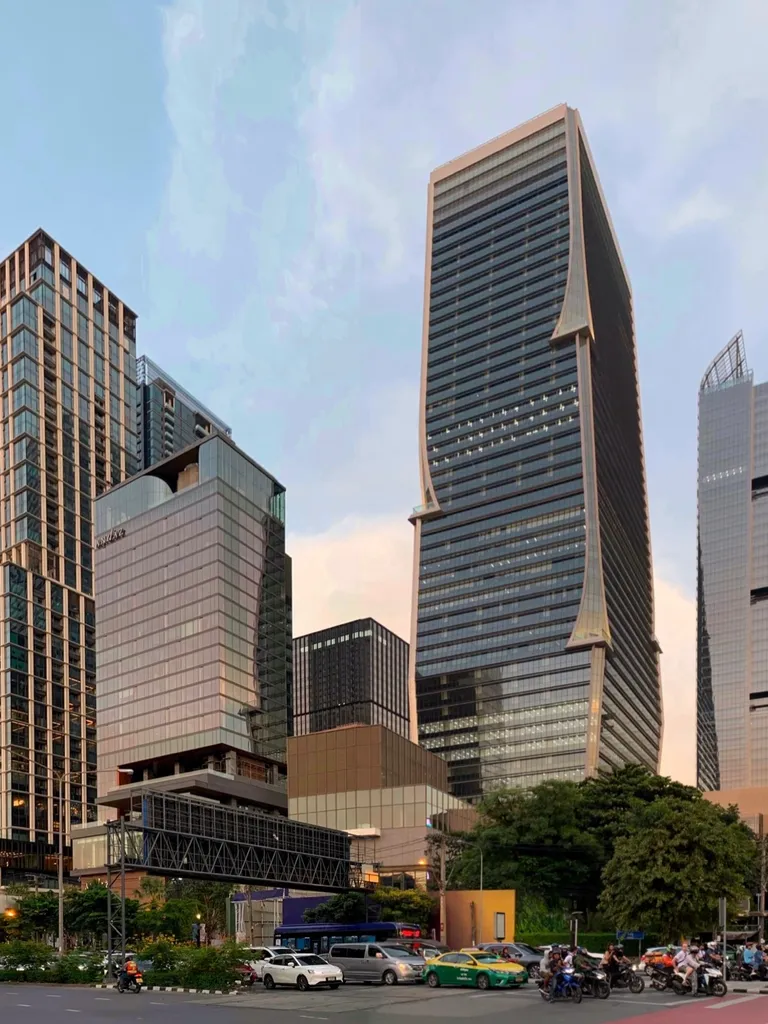
That decision belongs to the owner, and it comes early. At One Bangkok, we took on smart services delivery and systems integration for TCC Technology, the developer’s smart services company: we led the evaluation and procurement of vendors, and connected more than 30 operational and Internet of Things (IoT) systems through one vendor-neutral platform that was live when the district opened in October 2024. The lesson we took from it: commit to a vendor-neutral integration layer before procurement begins, because it’s far harder to retrofit than to design in.
An owner’s representative who can’t speak to building systems leaves those decisions to the vendors.
Questions to ask before appointing one
- Who will actually do the work, and how much of their time will we get?
- Which projects like ours have you run from the owner’s side?
- How will you report cost, programme and risk to us, and how often?
- How do you handle change: who can approve it, and how is it recorded?
- Do you take fees, commissions or referrals from designers, contractors or suppliers?
- What happens at handover, and how long do you stay after it?
- Can you speak to building systems and technology, or will you bring in someone who can?
Questions people ask
How do owner’s representatives get paid?
Usually by a fixed fee, a percentage of the construction or project cost, or a monthly fee, and often a mix of them. The scope of the appointment matters more than the model.
Is an owner’s rep the same as a construction manager?
No. A construction manager runs the construction, and a construction manager at risk also holds the trade contracts and a guaranteed price. An owner’s representative manages the whole project for the owner, the construction manager included.
What is a CMR in construction?
CMR, or CMAR, is short for construction manager at risk. The construction manager joins during design to advise on cost and buildability, then commits to build the project for a guaranteed maximum price, holding the trade contracts and carrying the cost of overruns above that price.
Why hire an owner’s representative?
To have one adviser whose only interest is yours, with the time and experience to run the project, when you don’t have that team in-house or need more of it.
If you’re planning a hotel, a mixed-use district or a building with serious systems in it, see our owner’s representative services. They sit within our development management work for developers, operators and hotels.