
Torn: Transforming infrastructure with rapid cloud migration
1.27B Daily requests
Cloud strategy, security and migration, with your data and AI kept under your control.
For technology leaders deciding where their systems, data and AI should run.
ddx is a cloud and infrastructure consultancy. We decide with you where your systems, data and AI should run, design security in from the start, keep regulated data where the law requires, and move live platforms without stopping them. Then we run them for you, or hand them to your team.
Before anything moves, decide what should. We review what you run today, what it costs, what data it holds and what it depends on. Then we set out where each system should run, in a public cloud, on your own servers or both, what it will cost there, and in what order to move it. A proof of concept tests the riskiest part of the plan on your real system before the money is spent.
You get: a cloud roadmap with costs, risks and the order of work, and a tested proof of concept.
Your customers, auditors and regulators will ask how your platform is protected. We put the answer in the design: who can reach what, encryption in transit and at rest, logging and monitoring, and how the platform recovers. For a platform that’s already live, a security review finds the weaknesses and ranks what to fix first.
At One Bangkok, cybersecurity controls and data privacy compliance were built into the district’s platform from the start.
You get: a security architecture, or a review with a ranked list of fixes, and the evidence your auditors will ask for.
Some of your data must stay in the country, or out of reach of another country’s laws. We map which of your data is regulated, where it may be stored and processed, and who may reach it, under the rules that apply to you: the UK’s and the EU’s General Data Protection Regulation (GDPR), Thailand’s Personal Data Protection Act (PDPA), and the privacy laws of Japan, Hong Kong and the UAE. Then we choose cloud regions and providers to match, put the encryption keys in your hands, and keep the records your auditors will ask for.
For Tops, Thailand’s PDPA and the EU’s GDPR were built into the supplier portal from the start.
You get: a map of your regulated data, a design that keeps it where it must be, and the audit trail to show it.
Not every system belongs in a public cloud. Some must keep their data in the country, answer within milliseconds, or run a steady load more cheaply on hardware you already own. We design hybrid platforms where your cloud and your own servers work as one: one network, one set of identities and permissions, one way to deploy and monitor.
At One Bangkok, each set of data sits on site, in the cloud or both, according to what it is and what privacy law requires. During Torn’s move to AWS, the game ran in the cloud while still reading from its on-premises databases, until they moved too.
You get: an architecture that puts each system where it fits, with the running costs side by side.
Your teams want AI, and your data can’t leave your control. We run language models where your data already lives. Managed models such as Amazon Bedrock, Azure OpenAI or Google’s Vertex AI keep prompts and documents in the cloud region you choose. Open-weight models, ones you can download and run yourself, sit on your own GPUs (graphics processors) or in a private cloud, so nothing leaves at all. We choose the model, size the hardware, and build in the retrieval, guardrails and testing.
Torn’s AI assistant runs on a model that can be swapped without disrupting the game, behind guardrails and thousands of automated tests.
You get: a private AI platform your security team can sign off.
How we built Torn’s AI assistant.
For AI strategy and assistants: AI consultancy.
A data centre contract is ending, the hardware is ageing, or the platform has outgrown its hosting. We move live platforms to the cloud without stopping them: the critical systems and data first, each step tested before the next.
When Torn’s data centre provider announced it was closing, we moved more than 20 years of its on-premises infrastructure to Amazon Web Services (AWS), and the game kept running. It now handles 1.27 billion requests a day.
You get: the migration plan, the move itself, and a platform that runs from the first day.
Every environment rebuilt from code, every release through an automated pipeline. We write your infrastructure as code, package your services in containers, and build the pipelines, tests and dashboards your team runs them with. For Torn, we built its first separate development environment in 20 years.
You get: environments you can rebuild exactly, routine releases, and documentation your team can work from.
A platform that slows at its busiest, or a bill that grows faster than the business. We find the slow queries, the missing caches and the oversized servers, fix them while the platform runs, and test at the scale of your busiest day before it comes. Lower-cost processors such as AWS Graviton, a cache in front of the database, and storage matched to each kind of data bring the bill down. Torn’s costs came down with caching at the edge and Graviton servers.
You get: a faster platform, a lower bill, and the running cost of each new feature known before it ships.
We run what we build: monitoring, scaling and improving your platform alongside your team. Or we hand it over, with the documentation and training to run it yourselves. We’ve run Torn’s platform since its move to AWS.
You get: a platform that keeps running, and a team that knows how it works.
Most of our production work runs on Amazon Web Services. We also design for Microsoft Azure and Google Cloud where your systems, contracts or skills already are, use Cloudflare at the edge, and build on Salesforce: we delivered Thailand’s first Salesforce Commerce Cloud project, for 6ty Degrees.
The deep thinking happens before the build, where problems are best solved. Then we move with pace, guidance and discipline.
You avoid the expensive pitfalls, so your budget does what it was planned for.
We map what you run, what it costs, what data it holds and what could fail, and rank what to fix first.
A proof of concept tests the plan on your real system before the money is spent.
The critical systems and data go first, and your product keeps running throughout.
Torn's cloud migrationWe stay to run it and keep making it faster, cheaper and safer, or hand it to your team.
1.27B Daily requests

+7% Player retention uplift

250,000+ IoT sensors across the district

2,100+ Local suppliers registered

CTO Technical leadership provided by ddx
End to end From stakeholder consultation to training and handover


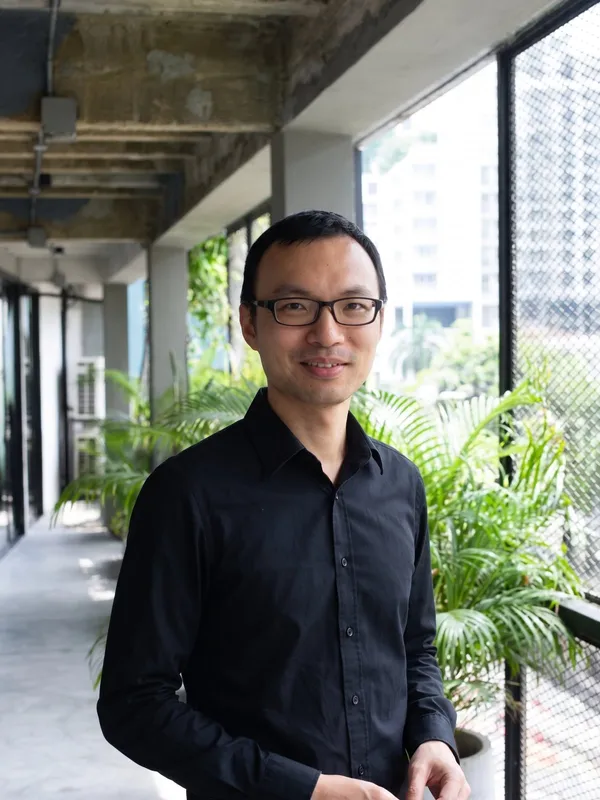
Head of Cloud
Leads ddx’s cloud and infrastructure work: architecture on Amazon Web Services, migration and cost optimisation. Designed, migrated and runs the cloud platform behind Torn, with 120,000 players and 1.27 billion requests a day, and has designed data centres and data lakes for clients.

Director of AI and Automation
Pete leads ddx’s AI practice, taking LLM systems from prototype to production for clients: in-game NPCs, retrieval at the edge, autonomous negotiation agents. He has twenty-five years of hands-on engineering behind him, from the BBC’s early iPlayer team to CTO of Broadbean, and still writes code every day.
Whether you're starting something ambitious or restarting something that's lost momentum, we'd like to hear about it.