Saudi Arabia’s giga-projects are the very large developments, from new cities to resorts and districts, that the kingdom is building under Vision 2030. Their owners need a project management office (PMO) that governs many packages, contractors and consultants as one programme, keeps a single record of decisions and documents, and plans for operations from the start.
Vision 2030 is Saudi Arabia’s national plan to diversify its economy beyond oil. The giga-projects are among its most visible parts. The names most often counted among them include NEOM, Red Sea Global, Qiddiya, ROSHN and Diriyah, most of them backed by the Public Investment Fund (PIF), the kingdom’s sovereign wealth fund.
What makes a giga-project different
A giga-project is not just a large project. It is many projects, delivered at once, that have to open as one place.
- Scale. Infrastructure, buildings, utilities and services for a whole city or region, planned together.
- Many organisations. A master developer, development companies, design consultants, project managers, contractors, technology vendors and future operators, from many countries and in many languages.
- Fixed dates. National targets and international events set opening dates that the programme can’t move.
- Building and operating at once. Early phases open and run while later ones are still under construction around them.
- Technology designed in. Smart city platforms, connectivity and data are part of the brief from the first masterplan, not added at the end.
- Standards set by the owner. Owners often ask for information to be managed to ISO 19650, the international standard for information on built assets, and for project management to follow recognised frameworks such as the Project Management Institute’s (PMI).
Each of these multiplies the others. A fixed date across many organisations, with technology that has to work across every phase, is a governance problem before it is a construction problem.
PMO, PMC and owner’s representative
In the Gulf, owners usually buy their project management as a project management consultancy (PMC): a firm that acts for the owner to manage design, procurement and construction. A PMO is the structure through which the owner governs its portfolio: the people, the processes, the reporting and the tools. A PMC often staffs the owner’s PMO.
In the US the same owner-side role is called an owner’s representative, and in the UK client-side project management. Read about ddx’s owner’s representative services.
Whatever it is called, the role is the same: someone on the owner’s side, independent of the designers and the contractors, holding scope, cost, programme and quality for the owner.
What owners need from a PMO
Governance that holds across organisations
On a giga-project, most of the parties have never worked together before. The PMO has to set the rules of engagement: who decides what, how information moves, and how issues escalate.
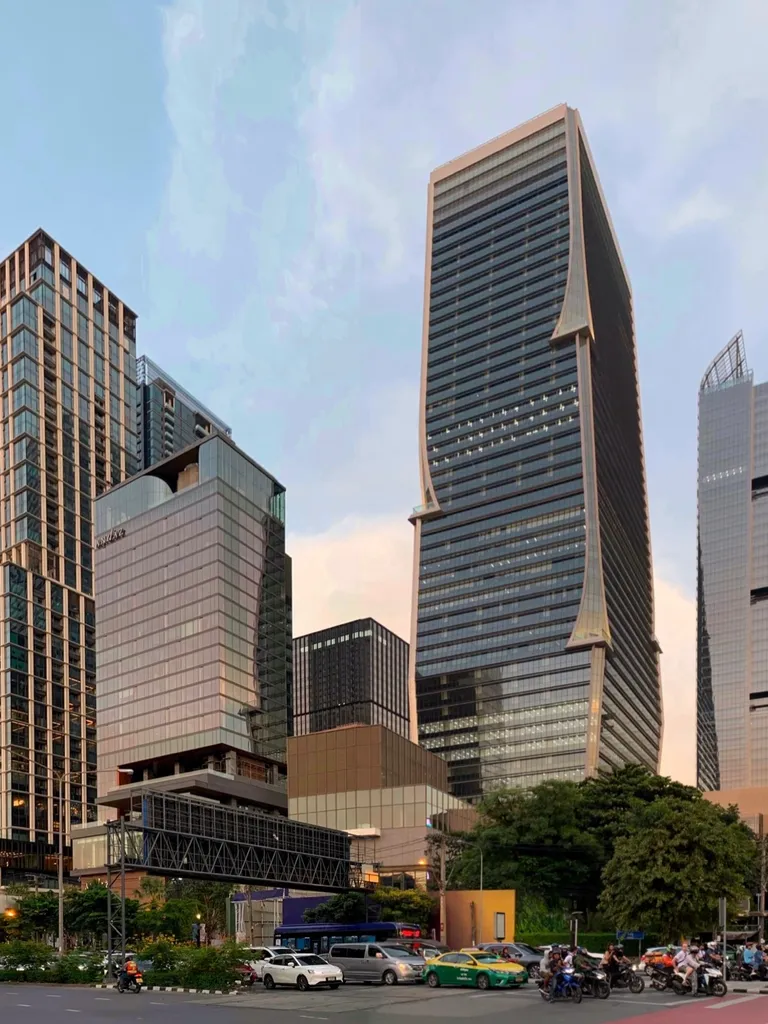
ddx did this on One Bangkok, Thailand’s first fully integrated smart district. Hitachi Asia brought ddx in to source and manage the Smart Services PMO, coordinating TCC Technology, Hitachi Asia and Frasers Property, none of whom had worked together at that scale. The PMO had to define role boundaries, communication protocols and escalation paths while managing live delivery, both from day one.
The right team, early
The Hitachi Asia case study draws the lesson:
In a programme with no regional precedent, the quality of the team and the clarity of its structure matter more than any technical decision. Governance and talent are not the scaffolding around delivery. They are the delivery.
Working with Forviz, ddx recruited the PMO’s core team, a Project Director, a System Architect, a Devices and Sensors Engineer, a Senior Scheduler and a Master Systems Integration Project Manager, and vetted the wider structure of about 120 people across 22 work packages. Read the Hitachi Asia case study.
One record
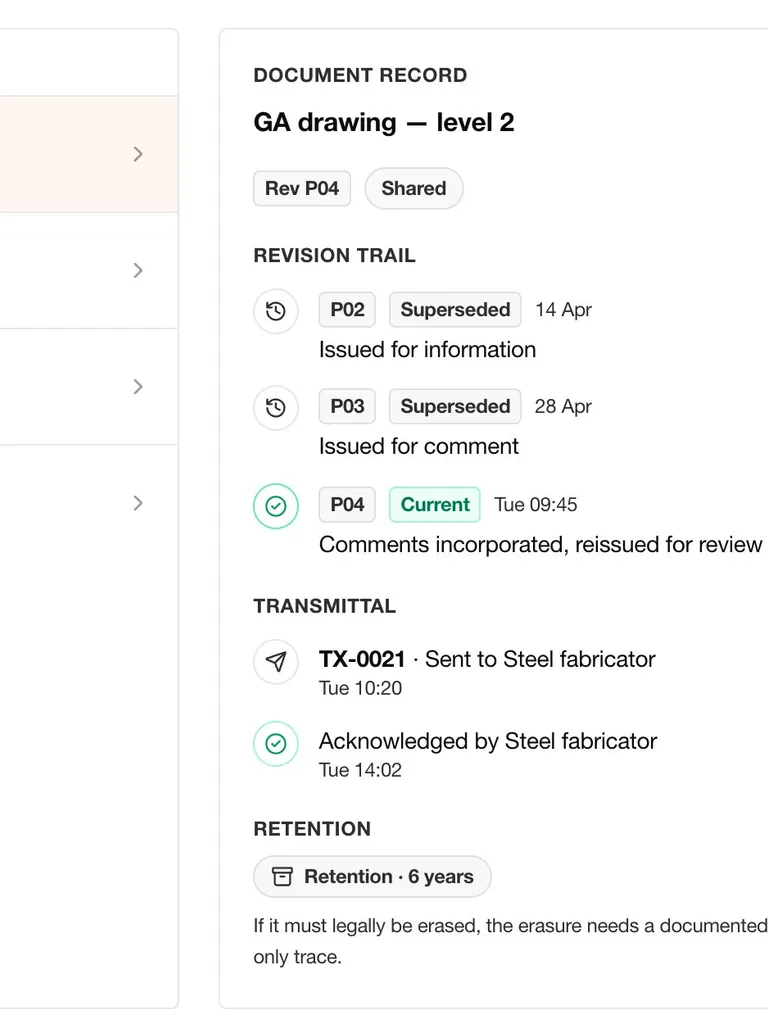
With many consultants and contractors exchanging drawings and decisions, the owner needs one record of what was issued, decided and changed, and when. Claims and disputes on large programmes turn on that record. Read what is a transmittal in construction?
ddx PMO, our PMO platform, builds one live record of every project, its risks, issues, decisions and actions, and files documents and drawings in a common data environment, with controlled revisions and transmittals that suppliers acknowledge in a portal of their own. Read more about ddx PMO.
Owner-controlled planning and controls
Each contractor plans and reports its own work. The owner needs its own view across all of them. On Marriott’s Tokyo flagship renovation, ddx’s approach is dual-layer planning: the contractors’ schedules integrated with an owner-controlled platform, giving real-time visibility of cost, programme and stakeholder performance, with formal change control, scope verification and risk management. Read project controls on development programmes.
Technology governed like construction
Smart city systems are often procured late, in separate packages, from many vendors. On a giga-project they need the same governance as the buildings. At One Bangkok, ddx led the technical evaluation and procurement of specialist vendors and managed the awarded work packages through the PMO, across a multinational vendor ecosystem with multilingual stakeholders. The lesson: commit to a vendor-neutral integration layer before procurement begins, because it is far harder to retrofit than to design in.
Readiness to operate
The programme isn’t finished when construction is. The owner’s team, or its operator’s, has to run what has been built from opening day. At One Bangkok, the integration platform was designed so the district’s own command centre team could operate it independently from day one, and it was live at opening in October 2024. Read the One Bangkok case study.
Data privacy and cybersecurity
Smart districts collect personal data at scale, and their systems are infrastructure. Both have to meet local law and international standards. In Saudi Arabia, that includes the kingdom’s Personal Data Protection Law.
Questions an owner should ask of its PMO
- Who decides what, across every organisation on the programme, and where is that written down?
- Is there one record of documents, decisions and changes, or one per contractor?
- Does the owner see cost and programme in its own system, or only in contractors’ reports?
- Are technology packages governed with the same discipline as construction?
- Who will run the place on opening day, and when do they join the programme?
ddx has an office in Dubai. Read more about its PMO consultancy.