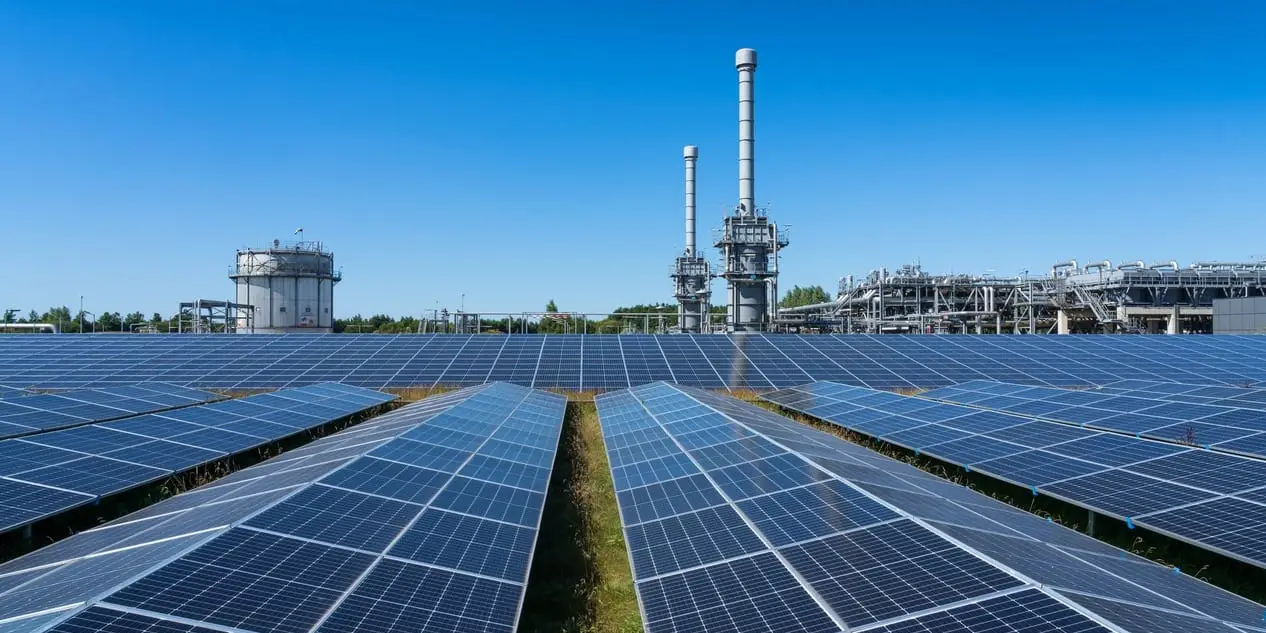
An eco-industrial park is an industrial estate where the operator and the businesses in it manage energy, water, waste and materials together, so the estate uses fewer resources and one firm’s by-product can become another’s input. A smart industrial estate adds the connectivity, metering and data platform that make those flows visible and manageable.
The two ideas are usually discussed apart: eco-industrial parks by development agencies, smart estates by technology vendors. In practice they need each other. An estate can’t manage resources it can’t measure, and measurement is only worth the cost if it changes how the estate is run.
What makes an industrial park “eco”
An ordinary industrial estate provides land, roads, utilities and security, and leaves each business to run its own operations. An eco-industrial park goes further, in four areas. The international framework published by UNIDO, the World Bank and GIZ groups its requirements in much the same way.
- Environment. Energy from renewable sources and used efficiently; water treated and reused; waste reduced, recovered and exchanged; emissions monitored.
- Society. Decent jobs and working conditions, and a good relationship with the communities around the estate.
- Economy. Lower costs for the businesses in the park, and a stronger case for investors choosing where to locate.
- Park management. An operator with the mandate, the people and the information to make all of the above happen across many tenants.
The idea at the centre is industrial symbiosis: firms sharing or exchanging energy, water and materials, so that one plant’s waste heat, steam or by-product becomes another’s input. The best-known example, at Kalundborg in Denmark, grew over decades as neighbouring firms began to exchange steam, water and materials.
What makes an industrial estate smart
A smart industrial estate uses digital infrastructure to run the estate and serve its tenants. Typically:
- Connectivity: fibre and mobile networks across the estate, built in rather than added later.
- Metering: electricity, water and wastewater measured per tenant, often in real time.
- Energy: on-site generation such as solar, storage, and systems that balance supply and demand across the estate.
- Security and access: cameras, access control and management of the trucks and vehicles entering the estate.
- Environmental monitoring: air and water quality, emissions and noise.
- An integration platform and an operations centre: one place where the estate’s systems come together and the operator acts on them.
- Services for tenants: utilities, permits and maintenance requests handled online.
As with a smart building, the devices are the easy part. What makes the estate smart is the integration between them and a team that uses the result.
Why the two belong together
Every one of the eco-industrial park’s environmental aims depends on data. Matching one firm’s surplus heat to another’s demand needs both measured. Reducing water use across an estate needs metering by tenant. Reporting energy and emissions needs figures someone can stand behind.
The smart estate supplies that data. The eco-industrial park gives it a purpose. Put together, they make an estate that is cheaper to operate, easier to report on, and more attractive to manufacturers whose own customers and investors ask how and where their products are made.
From industrial estate to smart city
The newest estates are planned as more than places to make things. A high-tech park needs engineers, researchers and managers, and they choose where to work partly on where they can live. So estates are adding homes, schools, shops, healthcare and public transport, and starting to look like small cities.
That brings city-scale questions into the estate: mobility, public services, public space and the daily lives of the people who live there, alongside the operations of the businesses that locate there. The AMATA partnership announcement made the case directly: “Combining a smart city with a high-tech development park in a single development offers numerous advantages, creating an environment that enhances innovation, sustainability, and economic growth.”
The two halves still need one operator’s view. Factories, homes and public services share the same roads, energy and water, and the same platform should see all of them.
Thailand’s Eastern Economic Corridor
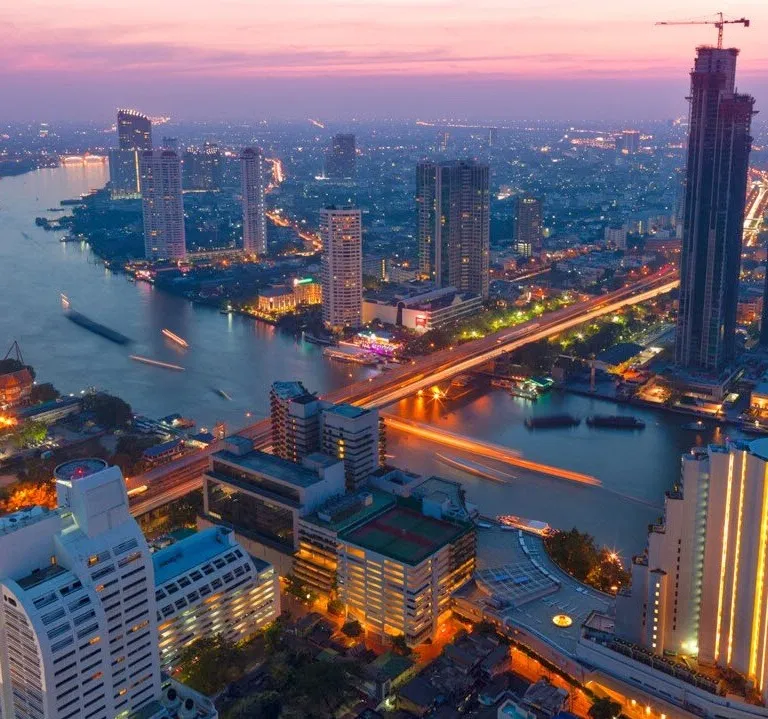
Thailand’s Eastern Economic Corridor (EEC) is a special economic zone covering three provinces east of Bangkok: Chachoengsao, Chonburi and Rayong. Its office, the EEC Office (EECO), and Thailand’s Board of Investment (BOI) offer incentives to investors in target industries.
For European investors in particular, the AMATA partnership announcement described the corridor as “a blend of economic incentives, robust infrastructure, skilled labour, technological readiness, and a commitment to sustainability and smart city development”.
AMATA European Smart City
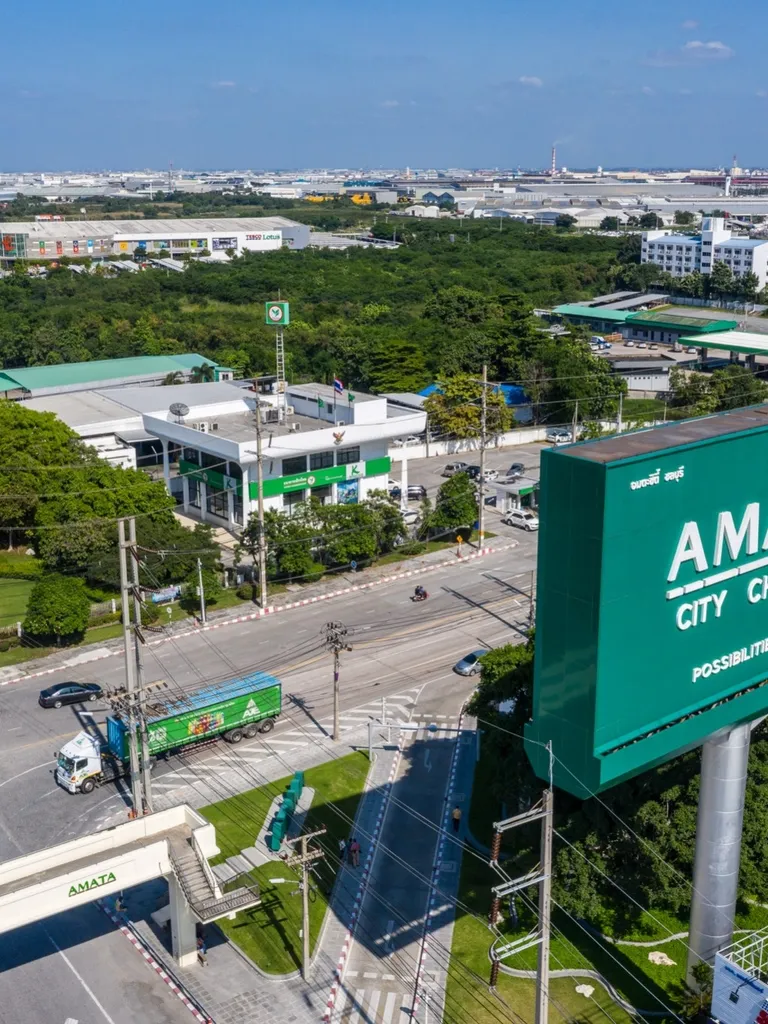
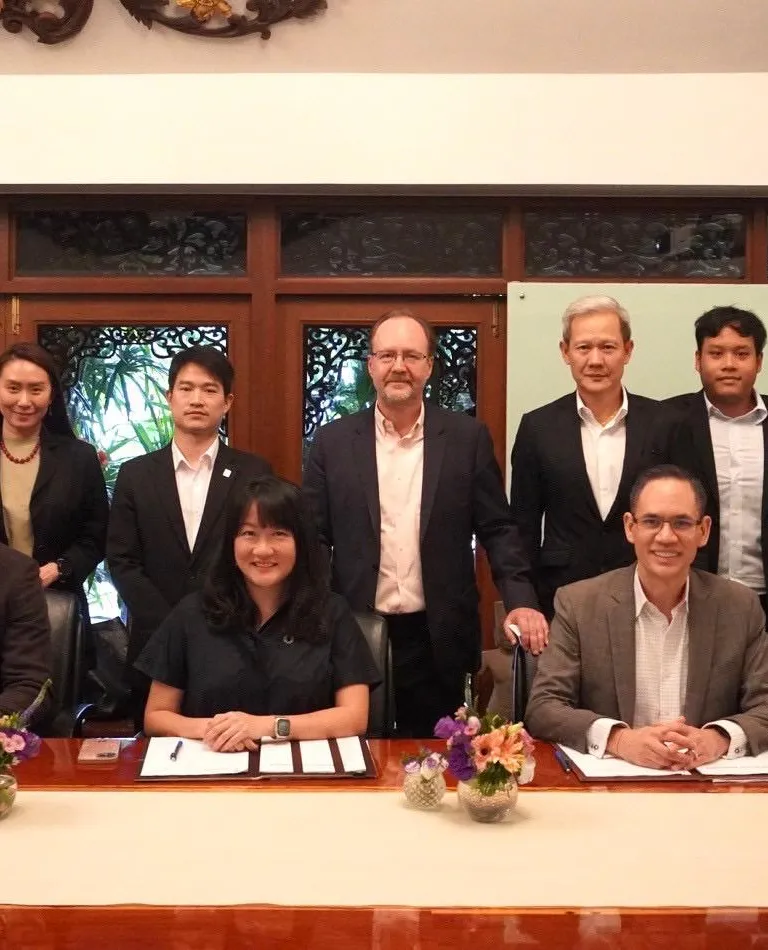
In July 2024, ddx, AMATA Corporation and B.Grimm Power signed a strategic partnership to develop the AMATA European Smart City project within the AMATA City Chonburi Industrial Estate, in the EEC.
The project spans 200 rai, about 32 hectares. It is planned as a hub for high-tech investment from European countries, combining smart city concepts, high-tech industries and industrial development in one place. Each partner brings one part: AMATA its experience of managing industrial estates, B.Grimm Power its sustainable energy solutions, and ddx its smart city development and deployment experience, at home and abroad.
The first phase covers strategic planning, market analysis, and identifying potential partners and stakeholders. Read the AMATA partnership announcement.
What an estate operator should decide first
Most of the decisions that shape a smart, eco-industrial estate come before any system is bought.
- What the estate will manage centrally, such as energy, water, waste, security and logistics, and what it will leave to tenants.
- What data it needs, from whom, and who owns it. Tenants will share more when they know how their data is used and protected, including under Thailand’s Personal Data Protection Act (PDPA).
- Which infrastructure is shared, and who pays for it.
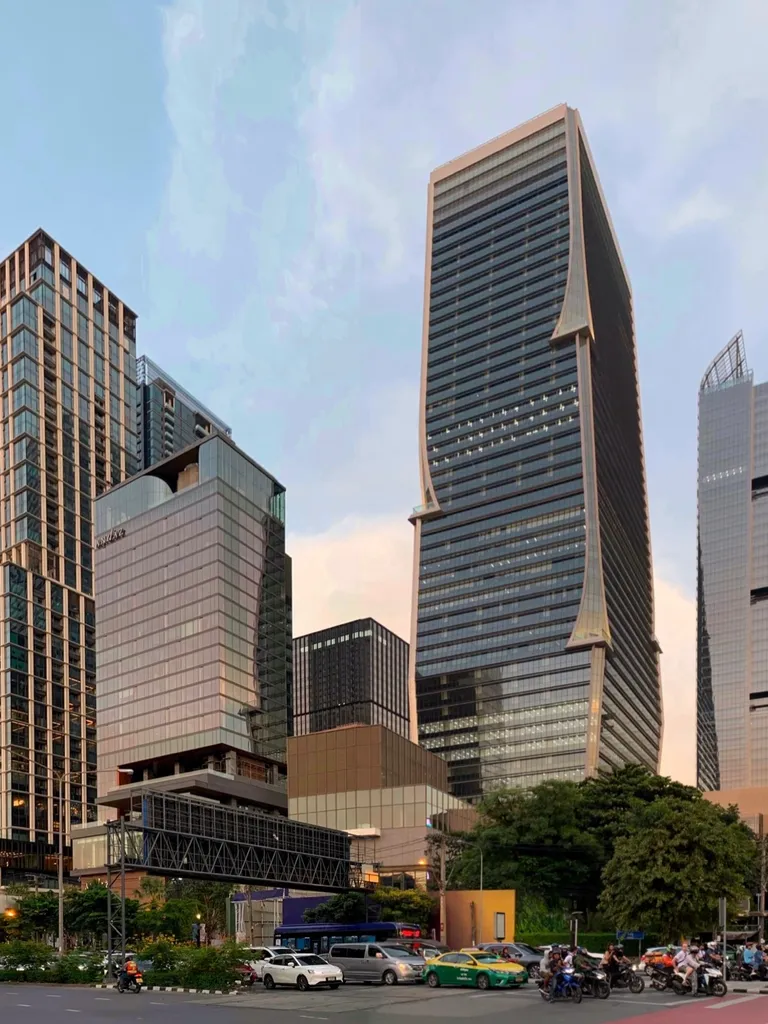
- How the systems will connect. At One Bangkok, the lesson was to commit to a vendor-neutral integration layer before procurement begins: it removes the most persistent source of lock-in, and it is far harder to retrofit than to design in. Read the One Bangkok case study.
- Who will run it, and how that team will be ready on the day the first tenant moves in.
ddx works on these questions with developers and estate operators as part of its work in urban development.